You have a deck, a couple of quiet minutes, and the sense that a daily tarot card pull is supposed to do something for you. But what? Do you ask a question first? Shuffle a certain way? And once a card is staring up at you, how do you get from "that's the Three of Cups" to something you can actually use before you leave the house?
This post walks through a one-card pull from start to finish: choosing a question, drawing, reading what you see, and turning it into a note you'll want to look back on. By the end you'll be able to sit down with any deck and run the whole thing in under five minutes, without needing anyone to tell you what your card "means."
Pick your question before you touch the deck
A one-card pull answers whatever you bring to it, so the quality of your question shapes the quality of your read. Vague in, vague out. "What's my day going to be like?" invites a vague card and a vaguer interpretation. Something with an edge gives the card something to push against.
Open-ended questions work better than yes/no ones, because a single card is bad at yes and no but good at angle and emphasis. Try framing it as "what should I keep in mind about..." or "where's my attention best spent today?" rather than "will today go well?"
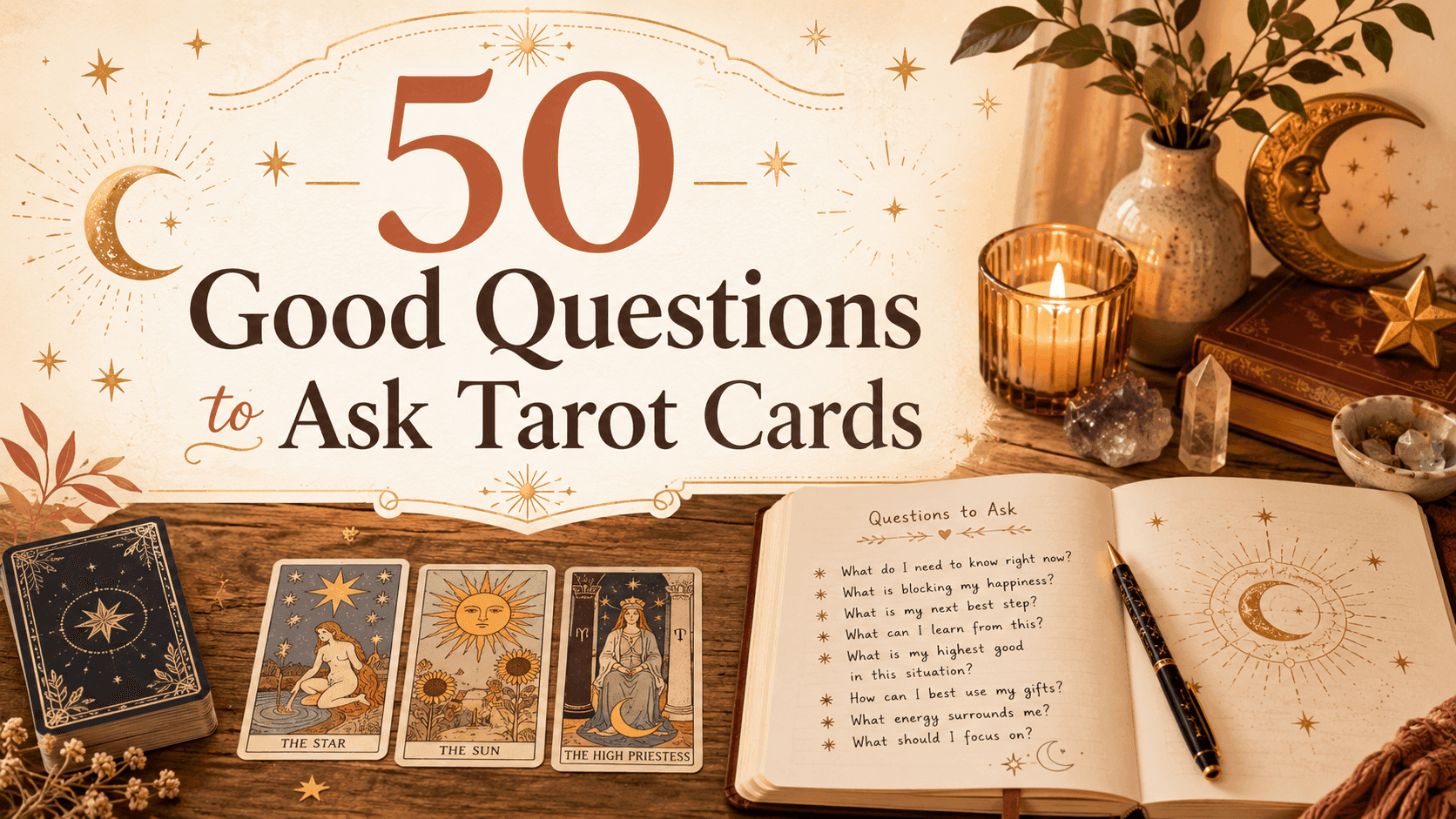
A few questions that tend to produce useful pulls:
- What should I focus on today?
- What am I overlooking about [a specific situation]?
- What am I bringing into [a meeting, a conversation, a task]?
- What would help me feel steadier today?
One thing to avoid: don't ask a one-card pull to make a decision for you. "Should I quit my job?" is too big and too consequential for a single card, and treating tarot as a decision-machine is where a lot of beginners get into trouble. A pull is a prompt for reflection, not a verdict. Ask it to show you an angle, then you decide.
Shuffle and draw one card
There's no correct shuffle. The point is just to mix the deck enough that you're not steering toward a card you can already see. Riffle shuffle, overhand shuffle, or swirl the cards around on the table like you're mixing dominoes. Do whatever your deck can physically handle: coated cards are stiff and tend to snap, while older or flimsier cards bend, so the table-swirl method is gentler on them.
While you shuffle, hold your question loosely in mind. You don't have to chant it or force concentration. Think of it the way you'd keep a name in your head while scanning a crowd for that one person.
When you feel ready, stop, then pick a card. Common methods are taking the top card, cutting the deck and taking the card at the cut, or fanning the deck face-down and pulling the one your hand lands on. None is more "accurate" than another, so choose one and use it consistently. Doing it the same way each time makes your pulls easier to compare later on.
Look at the card before you look it up
Here's where most beginners rush, and it's worth slowing down for. The instinct is to flip the card, not recognize it, and immediately reach for a guidebook or your phone to find out what it "means." Do the opposite first. Spend fifteen seconds just looking.
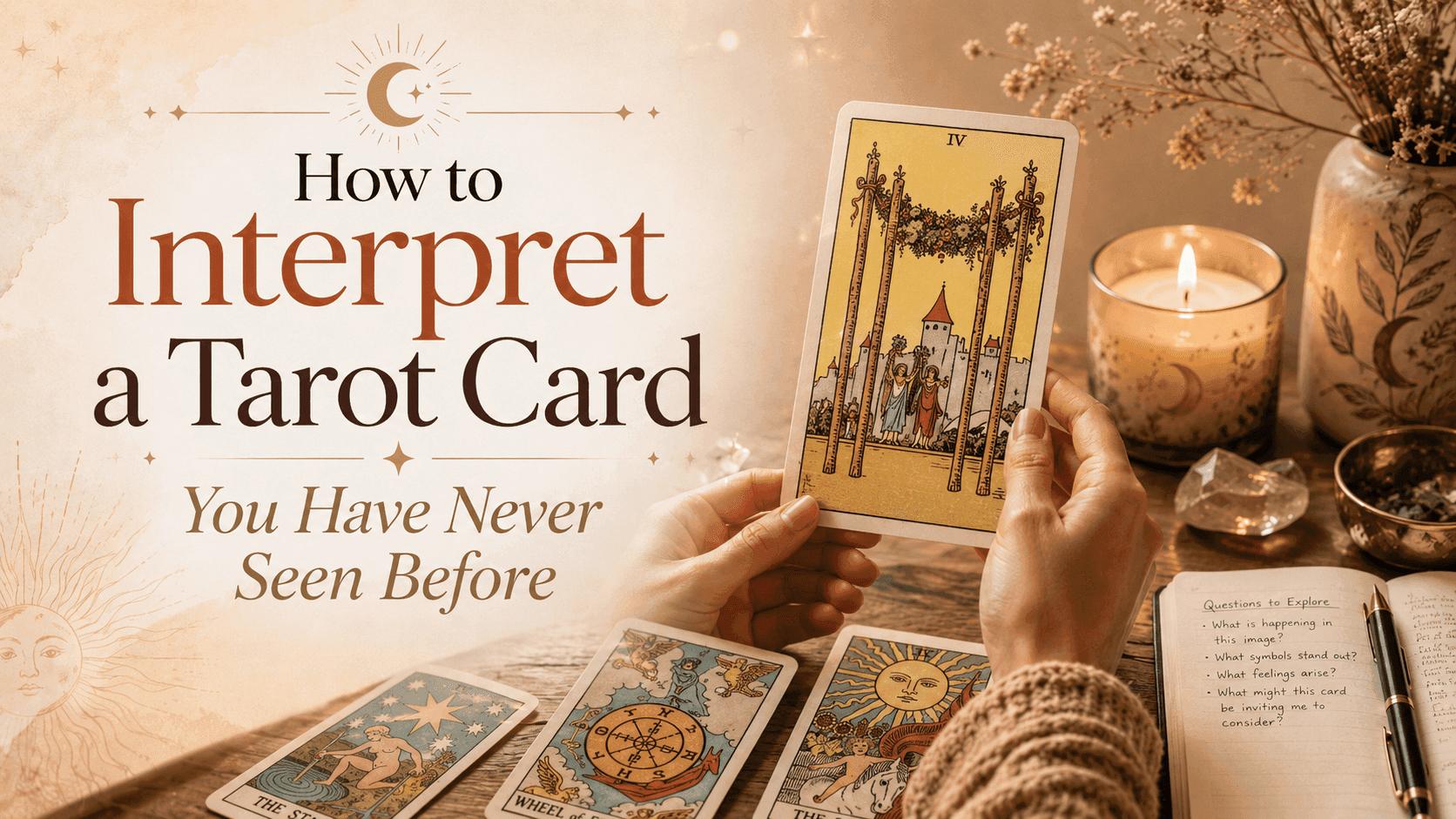
Notice what's actually on the card. Who's in the picture, what are they doing, where are they looking? Is the scene crowded or empty, calm or busy, day or night? What's the first feeling you get before any interpretation kicks in? The Rider-Waite-Smith deck, the one most beginners learn on, is known for its detailed scenes on every card, including the numbered minor cards, which makes it well suited to reading by looking rather than by memorizing.
Say you pull the Eight of Cups and, before knowing a single "official" meaning, you notice a figure walking away from a stack of cups toward mountains at night. You've already got the gist: leaving something behind, a departure that looks deliberate but not triumphant. A guidebook will fill in nuance, but the picture gave you the bones.
Read the card against your question
Now bring the card and your question together. This is the real work of the pull, and it's where a card stops being a generic symbol and becomes about your Tuesday. The same card reads differently depending on what you asked.
Take the Three of Swords, a card traditionally associated with heartache or painful clarity, whose image is usually a heart pierced by three swords. If you asked "what should I focus on today?" it might nudge you toward addressing something painful you've been avoiding. If you asked "what am I bringing into this difficult conversation?" it might point instead to guardedness, or an old hurt you're carrying in. Same card, different doorways, because the question changed.
If a card feels like it doesn't fit your question at all, don't force a neat answer. Sit with the mismatch. Sometimes the least obvious connection is the useful one, and sometimes a card just hands you a word or an image to carry and nothing more. That's allowed.
Imagine someone named Dana starting a new job this week, nervous about a first team meeting. Dana asks, "what should I keep in mind going into this meeting?" and pulls the Page of Pentacles. Rather than googling it right away, Dana looks: a young figure studying a single coin with real focus, in no hurry. The first read is student energy, paying attention, beginner's patience. Dana lands on a plan: go in as a learner, ask questions instead of trying to impress, take notes. Later, checking a guidebook, Dana sees the Page often described as a studious beginner, which confirms the instinct rather than replacing it. The whole thing took four minutes and gave Dana one concrete intention to walk in with.
Reversals: use them, or skip them for now
Reversals are cards that come out upside-down, and readers genuinely disagree about them. Some treat a reversed card as a weakened, blocked, or inverted version of its upright meaning. Others ignore orientation entirely and read every card upright. Neither camp is doing it wrong.
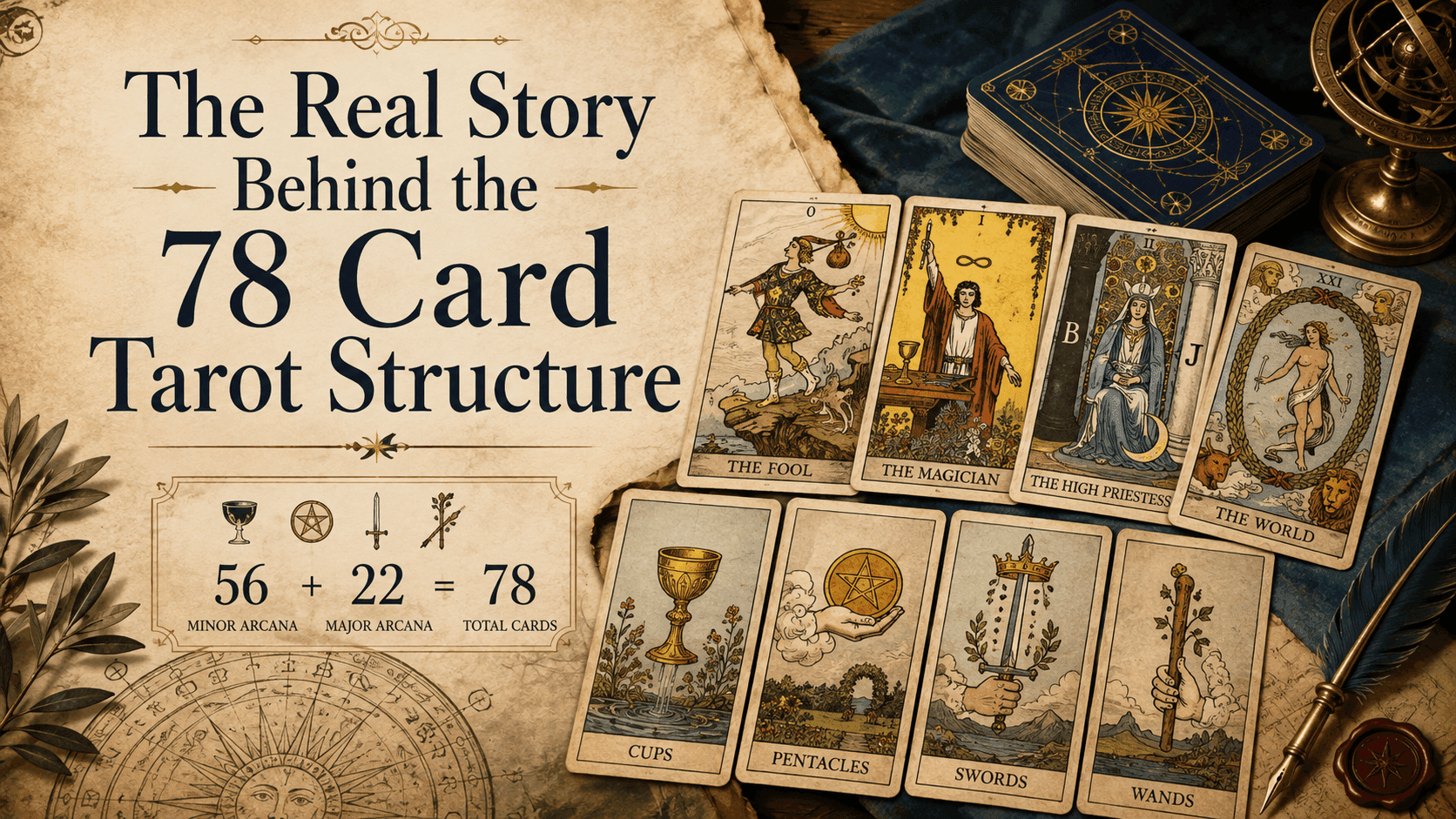
If you're just starting out, there's a good case for skipping reversals for a while. Seventy-eight cards is already a lot to get familiar with, and doubling that to a hundred and fifty-six shades of meaning can stall you before you build any fluency. Learn the upright cards first, then add reversals later if they interest you.
If you do want to use them, keep it simple at first: read a reversal as "this, but quieter, stuck, or turned inward." A reversed Ten of Cups might read as domestic contentment that feels just out of reach rather than fully arrived. You can get more sophisticated once the basics are second nature.
Turning it into a daily tarot card pull you'll keep
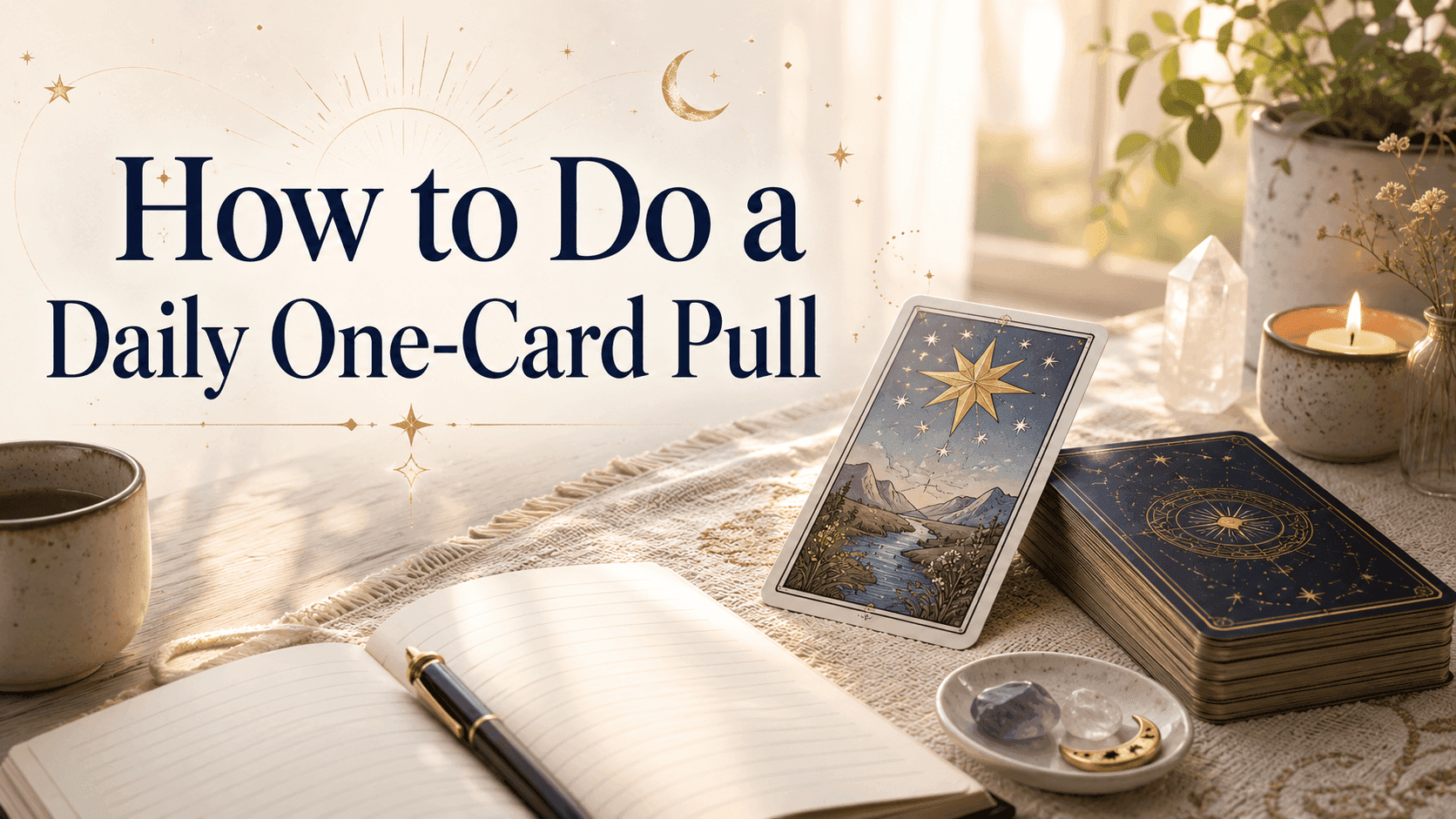
One pull is interesting. The habit is where it gets useful, because patterns only show up over time. That's the whole idea behind a daily tarot card pull: a small, repeatable practice you can actually sustain, rather than an elaborate spread you do twice and abandon.
The trick to keeping it is writing it down. Keep a simple log with the date, your question, the card, and a sentence or two on what you made of it. Don't skip the "what you made of it" part, because that's the part you'll actually reread. Over a few weeks you'll start noticing things: which cards recur, how your reading of a card shifts, whether a card that puzzled you in week one suddenly clicks in week four.
Attach the pull to something you already do so you don't have to remember it. Draw a card while the coffee brews, or right after you sit down at your desk. A pull you do at a consistent moment survives; a pull you do "whenever" quietly disappears.
Conclusion
The whole practice comes down to one shift: treat the card as a mirror, not a forecast. You're not finding out what will happen. You're getting a fresh angle on what you're already carrying into the day.
Your next action, if you want one today: pull a single card right now with the question "what should I keep in mind today?" Look at it for fifteen seconds before you look anything up, then write down one sentence about what it brought to mind. That one note is the seed of a daily tarot card pull practice, and it's enough to start.