Major ArcanaCard 12Water · Neptune
Tarot Card Meaning

The Hanged Man

The Hanged Man tarot card means surrender, pause, and seeing from a new perspective. Explore its upright and reversed meanings, symbolism, and daily-pull guidance.

The Hanged Man tarot card
At a glance

Quick Keywords

Upright
  • surrender
  • new perspective
  • pause
  • letting go
  • suspension
  • sacrifice
  • patience
  • seeing differently
Reversed
  • resistance to change
  • stalling
  • unnecessary sacrifice
  • delay
  • martyrdom
  • avoiding a needed pause
  • forced perspective shift
Symbolism

What's in the Image

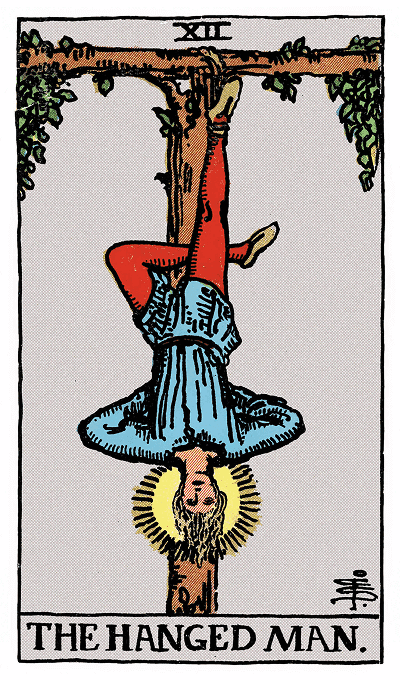
The The Hanged Man — Rider-Waite-Smith version
Rider-Waite-Smith
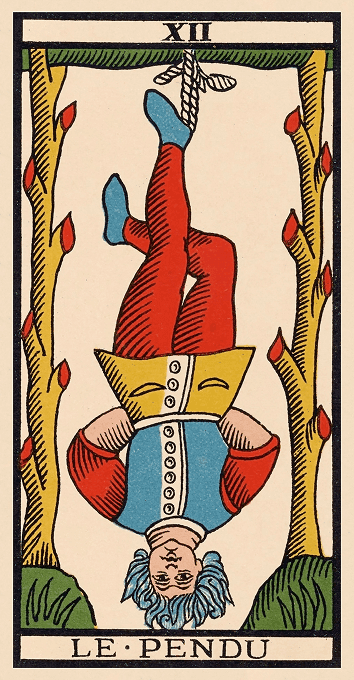
The The Hanged Man — Marseille version
Marseille
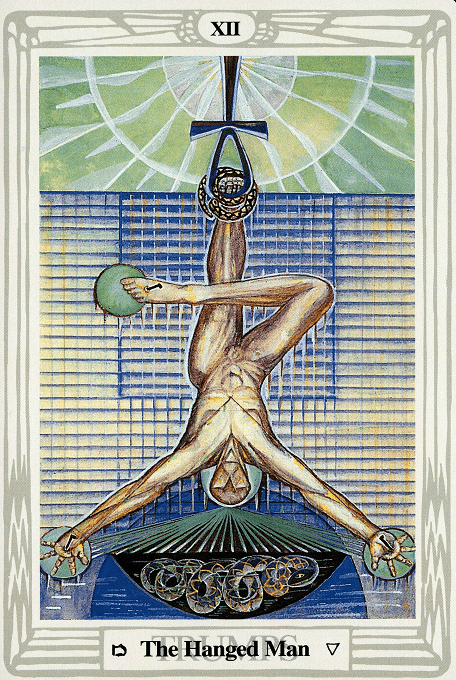
The The Hanged Man — Thoth version
Thoth

In the Rider-Waite-Smith deck, a man hangs upside down by one foot from a wooden structure formed like a T-shaped cross, his other leg bent to form a triangle shape, his hands tied behind his back. A halo-like glow surrounds his head, and his expression is calm rather than pained. The core message concentrates in three details: the calm, untroubled expression despite the uncomfortable position, the glowing halo suggesting insight rather than punishment, and the inverted posture itself, which turns the ordinary world upside down for the person experiencing it. Together these describe a deliberate pause that leads to altered understanding rather than a depiction of suffering for its own sake.

Waite's 1911 notes specifically call this card a symbol of "life in suspension" and connect it to Norse mythology's Odin, who hung from the World Tree Yggdrasil to gain wisdom, a detail modern readers often skip in favor of the more visually obvious cross shape. This card's roots go back further and darker than most: earlier versions, including in the Tarot de Marseille (Le Pendu), are widely believed to depict a punishment once used against traitors and debtors in medieval Italy, hung by one foot as public humiliation. Waite and Smith's calm expression and subtle halo represent a real reframing of that older, harsher image into one of voluntary surrender and insight rather than punishment.

Upright Meaning

The Hanged Man represents a deliberate pause that shifts how you see a situation. Its essential energy is surrender, not defeat, but a willingness to stop pushing forward and let a different perspective emerge instead.

In everyday situations, this often shows up as a forced or chosen delay, like a project on hold, a decision you're not ready to make yet, or simply a period where the usual forward motion isn't available or advisable. It can also describe seeing a familiar problem from an entirely new angle, often precisely because you've stopped trying to force a solution.

A nuance beginners often miss is that the Hanged Man's surrender isn't passive resignation. The calm expression on the figure's face suggests this pause is meaningful, even valuable, rather than simply enduring something unpleasant until it ends. Reading this card only as "you're stuck" misses its equally strong connection to the insight that stillness itself can produce, insight that wouldn't be available if you kept pushing ahead.

Readers disagree somewhat on how voluntary this pause needs to be to count as a genuine Hanged Man moment. Some traditions emphasize willing sacrifice: choosing to give something up or slow down because you recognize its value, closer to Waite's Odin reference and the idea of wisdom gained through a chosen ordeal. Other readings acknowledge the card's darker Marseille roots and allow for circumstances that force the pause on you, arguing the resulting perspective shift can still be valuable even if the situation wasn't chosen. Both readings share the theme of altered understanding through stillness; they differ mainly in how much agency the pause requires.

Reversed Meaning

Reversed, the Hanged Man doesn't simply mean the opposite of surrender, as though someone is now moving forward freely. That would just negate the upright meaning. The more useful distinction is between resisting a pause that's actually needed and a sacrifice or delay that's become unnecessary or unhelpful. Resistance suggests fighting against a natural stopping point, insisting on forward motion when stepping back would actually serve you better.

A different shadow expression involves the opposite problem: staying suspended longer than needed, treating a pause or sacrifice as a permanent identity rather than a temporary state. This can look like martyrdom, continuing to give something up long after the situation that required it has passed, or using "waiting" as an excuse to avoid a decision that's actually ready to be made. This is nearly the opposite of resisting the pause, yet both meanings appear under a reversed Hanged Man depending on the specifics of the reading.

The reversed card can also point to a forced, uncomfortable perspective shift, one that arrives through frustration or stuckness rather than through the calm acceptance the upright card describes. This differs from voluntary surrender; here the issue is a shift in view that feels imposed rather than chosen.

It's worth noting that some readers don't use reversals at all, reading every card only upright and relying on surrounding cards for shading instead. If that's your approach, the resistance, prolonged sacrifice, and forced-perspective readings above still apply, held as tensions that can appear within an upright Hanged Man, particularly in a reading involving a decision that feels stuck or overdue.

In a daily reading

The Hanged Man in a Daily Reading

As a single morning card, the Hanged Man is worth reading as a nudge to slow down rather than push forward today, especially if you've been forcing a decision or outcome. It's a good day to notice whether stepping back, even briefly, might reveal something you can't see while still in motion.

Say you pull this card before a day that includes a decision you've been eager to finalize quickly. The Hanged Man doesn't tell you the decision is wrong; it suggests giving it a bit more time, and staying open to the possibility that waiting will show you an angle you hadn't considered while rushing toward an answer.

A daily-pull scenario

A Daily-Pull Scenario

Imagine pulling the Hanged Man on a morning before a day you'd planned to be highly productive, only to find yourself unexpectedly stuck in traffic or dealing with a canceled meeting. A beginner's first instinct might be to read this as confirmation that the day is simply unproductive or wasted. A more useful reading treats the unexpected pause as an opportunity rather than a loss, worth asking what becomes visible in the unplanned stillness that wouldn't have been noticed in a full, busy schedule. The card reframes the delay as potentially useful rather than purely frustrating.

Read with care

Common Misreadings

  • This card means something bad is happening to me.

    The Hanged Man's calm expression and halo suggest insight rather than punishment. The pause described here is meant to be meaningful, not simply a depiction of suffering or misfortune.

  • This card means I should give up entirely.

    Surrender here means releasing the need to force an outcome, not abandoning the goal altogether. The pause is usually temporary, meant to shift perspective rather than end the effort permanently.

  • Reversed always means I'm avoiding necessary rest.

    Reversed can describe resisting a needed pause, but it can just as easily describe staying stuck in an unnecessary sacrifice or delay long after it stopped being useful, a nearly opposite problem.

Combinations

Cards That Change Its Meaning

  • The Hanged ManThe Star

    Amplifies the sense of insight gained through stillness, suggesting the pause leads toward genuine hope or clarity, rather than simply prolonged waiting without any resolution in sight.

  • The Hanged ManEight of Swords

    Tempers voluntary surrender with a sense of feeling trapped, suggesting the pause may feel more like being stuck than like a chosen, meaningful stillness.

  • The Hanged ManThe Chariot

    Redirects patient surrender toward forward motion, suggesting the period of pause is ending and it's time to act on whatever perspective the stillness revealed.

Sit with it

Questions for Reflection

  1. 1

    Where in my life am I forcing forward motion when a pause might actually serve me better?

  2. 2

    What might I see differently if I stopped pushing for an outcome right now?

  3. 3

    Is there a sacrifice or delay I've been holding onto longer than it's actually needed?

  4. 4

    What would it look like to accept an unplanned pause today instead of resisting it?