Major ArcanaCard 4Aries
Tarot Card Meaning

The Emperor

The Emperor tarot card means authority, structure, and stability. Explore its upright and reversed meanings, symbolism, and daily-pull guidance.

The Emperor tarot card
At a glance

Quick Keywords

Upright
  • authority
  • structure
  • stability
  • discipline
  • leadership
  • protection
  • order
  • long-term planning
Reversed
  • rigidity
  • controlling behavior
  • lack of discipline
  • abuse of power
  • instability
  • overreach
  • resistance to structure
Symbolism

What's in the Image

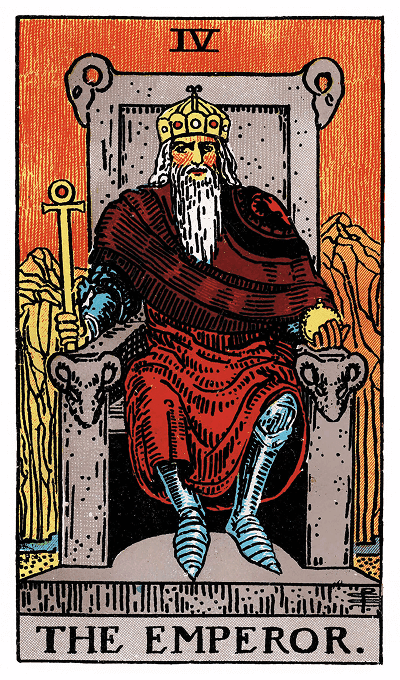
The The Emperor — Rider-Waite-Smith version
Rider-Waite-Smith
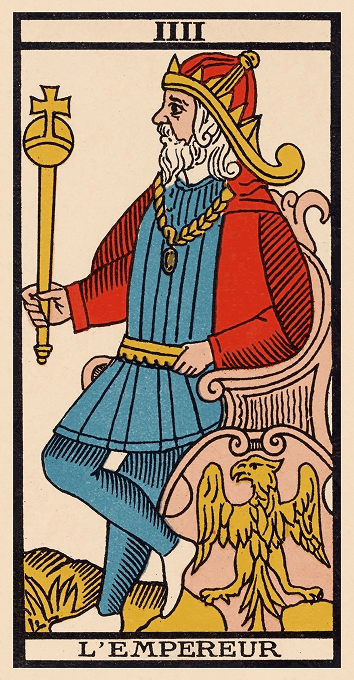
The The Emperor — Marseille version
Marseille
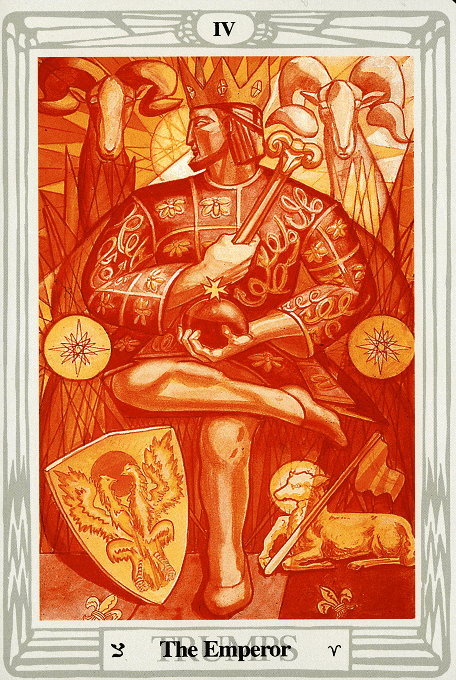
The The Emperor — Thoth version
Thoth

In the Rider-Waite-Smith deck, the Emperor sits on a stone throne carved with ram's heads, wearing red robes and armor beneath them, holding an ankh-topped scepter in one hand and an orb in the other. Behind him rises a barren, mountainous landscape rather than the fertile field seen behind the Empress on the card before his. The core message concentrates in three details: the stone throne (rigid and unmoving, unlike the Empress's cushioned seat), the barren mountains, and the ram's heads, which tie the figure to Aries and to assertive, initiating energy. Together these describe a figure whose stability comes from structure and control rather than from organic growth.

Waite's 1911 description calls him a figure of "virile power," language modern readers sometimes soften or skip past, though it's worth noting Waite paired that phrase with an emphasis on reason and established, settled authority rather than force alone. The Tarot de Marseille version of this card presents a more plainly regal figure: seated in profile, legs crossed, holding a scepter, without the ram's heads or the barren landscape Waite and Smith later added. That earlier version reads simply as worldly kingship, while the Rider-Waite-Smith addition of the harsh landscape behind him introduces a suggestion that this authority has been built by imposing order on something difficult or untamed.

Upright Meaning

The Emperor represents stability created through structure. His essential energy is discipline: setting clear boundaries, following through on long-term plans, and taking responsibility for maintaining order rather than reacting moment to moment.

In everyday situations, this often shows up as building or relying on systems, whether that's a budget, a schedule, a set of house rules, or a clearly defined role at work. It can also describe leadership in a practical sense: making decisions, setting expectations, and being the person others look to for direction, even in small, everyday settings like organizing a group project or a family logistics plan.

A nuance beginners often miss is that the Emperor isn't primarily about dominance for its own sake. The card is often read as protective authority, structure that exists to provide safety and consistency, rather than control exercised purely for its own benefit. Reading this card only as "be more assertive" or "take charge" skips over its equally strong connection to responsibility and long-term stewardship.

Readers disagree somewhat on how much weight to put on the Emperor's connection to fatherhood specifically versus authority more broadly. Some traditions read the card closely alongside the Empress as a literal parental pairing, emphasizing paternal figures and family structure. Other, more contemporary approaches read the card through any form of structured authority, including self-discipline, institutions, or systems a person builds for themselves, deliberately widening the interpretation beyond family roles. Both readings share the underlying theme of order; they differ mainly in how literally to take the paternal framing.

Reversed Meaning

Reversed, the Emperor doesn't simply mean weakness or a total lack of authority. That would just negate the upright meaning. The more useful distinction is between structure that's become rigid and structure that's genuinely absent. Rigid energy suggests someone clinging to control even when it's no longer useful, enforcing rules for their own sake, or resisting any change to a plan regardless of new information.

A different shadow expression involves the collapse of structure altogether: instability, a lack of follow-through, or difficulty setting and keeping boundaries. This can look like avoiding responsibility, letting plans fall apart, or struggling to establish any consistent routine. This is nearly the opposite of rigidity, yet both meanings appear under a reversed Emperor depending on the specifics of the reading.

The reversed card can also point to authority used poorly rather than absent entirely, describing control that tips into manipulation or overreach, where boundaries exist but serve one person's comfort at the expense of others. This differs from simple strictness; the issue here is structure being used to dominate rather than to protect.

It's worth noting that some readers don't use reversals at all, reading every card only upright and relying on surrounding cards for shading instead. If that's your approach, the rigidity, instability, and overreach readings above still apply, held as tensions that can appear within an upright Emperor, particularly in a reading that already suggests something is out of balance.

In a daily reading

The Emperor in a Daily Reading

As a single morning card, the Emperor is worth reading as a nudge to bring a bit more structure to the day rather than letting it unfold entirely on its own. It's a good day to notice where a clear plan, a boundary, or a bit of discipline would actually help rather than feel restrictive.

Say you pull this card before a day that includes setting a boundary with a coworker or family member who tends to ask a lot of you. The Emperor doesn't promise the conversation will be easy; it suggests approaching it calmly and clearly, from a place of steady responsibility rather than reactive frustration, and being willing to hold the line once it's set.

A daily-pull scenario

A Daily-Pull Scenario

Imagine pulling the Emperor on a morning before a performance review or a meeting where you need to present a plan to others. A beginner's first instinct might be to read this as permission to be forceful or to dominate the conversation, since the card is so visually associated with power. A more useful reading treats the card as a prompt about preparation and calm authority: have you actually organized your thinking clearly, and can you present it steadily, without needing to raise your voice or push harder than the situation calls for? The card describes composed structure, not aggression.

Read with care

Common Misreadings

  • This card means I need to be more dominant or forceful.

    The Emperor is about structure and responsibility, not force for its own sake. Reading it as license to dominate a situation overlooks its equally strong connection to protection and steady, reasoned authority.

  • Reversed always means someone is being controlling.

    Reversed can describe overreach, but it can just as easily describe a total lack of structure or follow-through, the opposite problem. The direction of the imbalance depends on the specifics of the situation.

  • This card is only about fathers or male authority figures.

    Some traditions do emphasize paternal imagery, but many contemporary approaches read the Emperor as any structured authority, including self-discipline or institutional order, regardless of who holds it.

Combinations

Cards That Change Its Meaning

  • The EmperorThe Chariot

    Amplifies the card's drive toward disciplined control, suggesting structure paired with forward momentum, often pointing to a plan that's not just organized but actively being pushed toward completion.

  • The EmperorThe High Priestess

    Tempers rigid structure with a need for intuition and patience, suggesting the situation needs more than logic and rules alone; some quiet, receptive attention is also called for before acting.

  • The EmperorThe Tower

    Redirects the card's steady order toward sudden collapse, suggesting a structure or system that's been relied on is about to be disrupted or forced to change abruptly rather than continuing to hold firm.

Sit with it

Questions for Reflection

  1. 1

    Where in my life would a little more structure or routine actually create more freedom, not less?

  2. 2

    Is there a boundary I've been avoiding setting because it feels uncomfortable?

  3. 3

    Am I holding onto a rule or plan out of habit, even though it no longer serves me well?

  4. 4

    What does responsible, steady leadership look like for me today, in even a small decision?