Upright Meaning
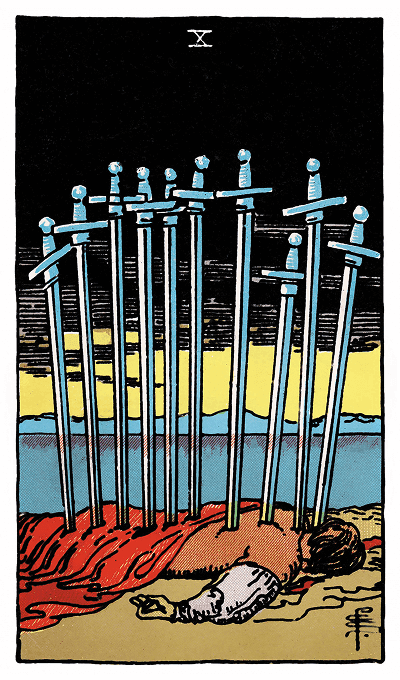
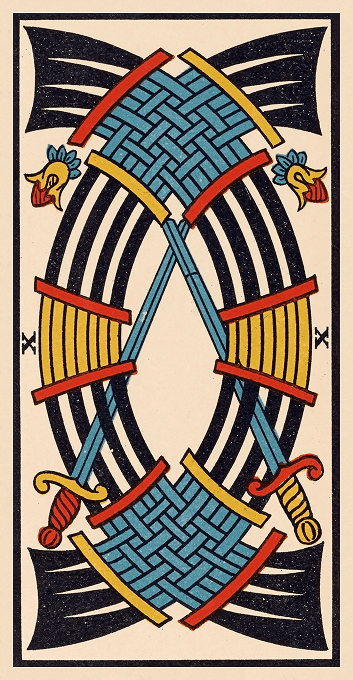
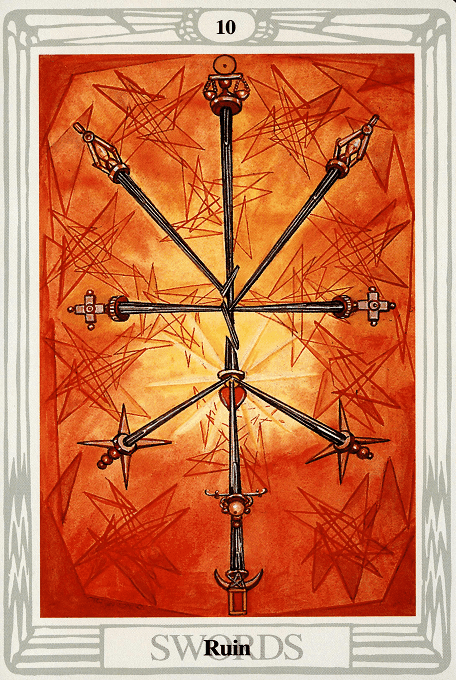
The Ten of Swords represents reaching the lowest, most exhausted point of a difficult situation, one that has already run its full course rather than one still unfolding. Its essential energy is a painful, definitive ending: a chapter concluding, often after prolonged struggle, betrayal, or hardship, with nothing further to be salvaged from that particular situation.
In everyday situations, this often shows up as the end of something that had already been declining for a while, like a relationship, job, or plan that finally, fully concludes after a long, difficult stretch. It can also describe a moment of genuine exhaustion, having given everything to a situation that ultimately couldn't be sustained or saved.
A nuance beginners often miss is that Waite's own notes specifically caution against reading this card as a literal death or violent event. The number ten and the dramatic imagery represent the suit's most extreme conceptual point, the absolute low of this particular kind of mental or circumstantial struggle, rather than a prediction about physical harm. Reading this card only as confirmation of literal disaster misses its more accurate, symbolic meaning: an ending that, however painful, has already reached its full extent and cannot get any worse from here.
Readers disagree somewhat on how much comfort this card's brightening horizon should offer alongside its otherwise stark imagery. Some traditions emphasize the difficulty and pain of the ending itself, treating the card as an honest acknowledgment of genuine hardship without rushing past it. Other readings lean more heavily into the horizon's suggestion of renewal, framing the card as marking the exact turning point where things can only improve from here. Both readings share the underlying theme of a difficult ending that has fully run its course; they differ mainly in how much emphasis to place on the hope embedded in the same image.