SwordsAir
Tarot Card Meaning

Six of Swords

The Six of Swords means transition, moving forward, and leaving difficulty behind. Explore its upright and reversed meanings, symbolism, and daily-pull guidance.

Six of Swords tarot card
At a glance

Quick Keywords

Upright
  • transition
  • moving forward
  • leaving difficulty behind
  • gradual healing
  • quiet passage
  • a necessary journey
Reversed
  • resistance to moving on
  • stuck in transition
  • returning to old difficulty
  • delayed healing
  • turbulent departure
Symbolism

What's in the Image

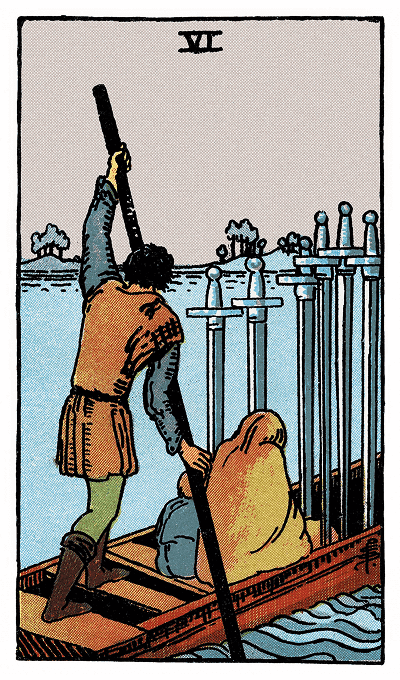
The Six of Swords — Rider-Waite-Smith version
Rider-Waite-Smith
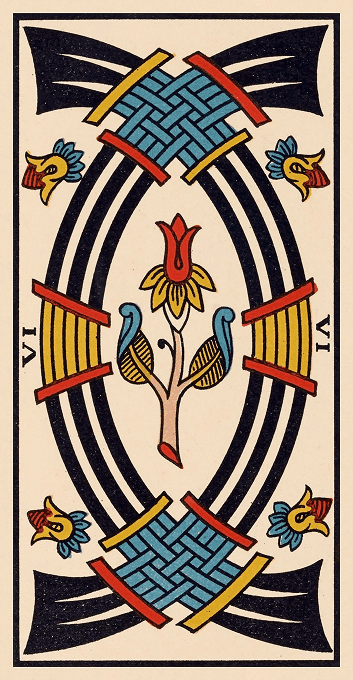
The Six of Swords — Marseille version
Marseille
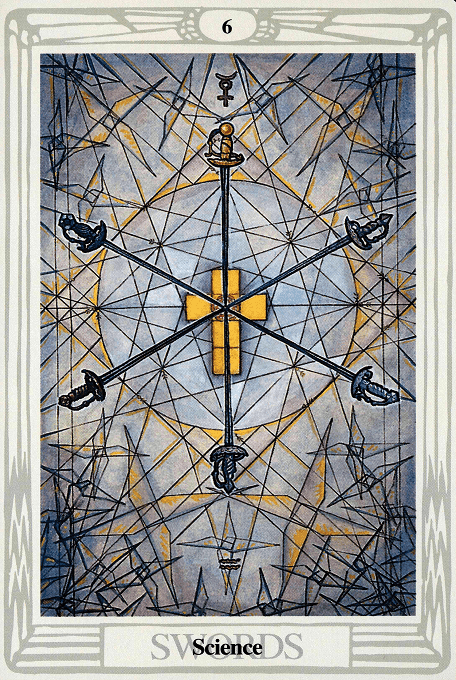
The Six of Swords — Thoth version
Thoth

In the Rider-Waite-Smith deck, a ferryman guides a small boat carrying a cloaked woman and a child across calm water toward a distant shore, with six swords standing upright in the boat itself. The water behind the boat appears choppier than the water ahead, which is notably smoother. The core message concentrates in three details: the contrast between the rough water behind the boat and the calmer water ahead, suggesting movement away from difficulty and toward greater ease, the six swords carried within the boat rather than left behind, indicating that past struggles are being brought along, at least for now, rather than fully resolved, and the huddled, quiet posture of the woman and child, suggesting a subdued, weary transition rather than an eager or celebratory one. Together these describe a passage away from hardship, made quietly and gradually rather than triumphantly.

Waite's 1911 notes describe this card as relating to "a journey by water" and a passage away from difficulty, without much elaboration beyond that fairly literal reading, a simplicity modern readers sometimes expand considerably into broader metaphors about emotional healing and transition. Earlier decks, including the Tarot de Marseille, depict the sixes of each suit without any illustrated scene, typically showing simply six swords arranged decoratively, meaning the specific image of a ferryman guiding passengers away from turbulent water is Waite and Smith's addition, giving this suit's six the quiet, transitional quality most readers now associate with it.

Upright Meaning

The Six of Swords represents a gradual transition away from difficulty, moving toward calmer circumstances even if the passage itself feels subdued rather than celebratory. Its essential energy is quiet forward movement: leaving a hard situation behind, not instantly, but through a steady, ongoing journey toward something more peaceful.

In everyday situations, this often shows up as moving past a difficult period, whether that's recovering from a stressful stretch, relocating away from a challenging situation, or simply making gradual emotional progress after a hard time. It can also describe a literal transition, like a move, a new job, or another significant life change undertaken specifically to leave a harder chapter behind.

A nuance beginners often miss is that this card's transition doesn't mean the past is instantly resolved. The six swords are carried in the boat rather than left on the shore, suggesting the difficulties being moved away from are still present in some form, even as the person moves toward calmer water. Reading this card only as "everything difficult is now behind me" misses its more accurate meaning: real, gradual movement toward relief, while still carrying some remnants of what came before.

Readers disagree somewhat on how much agency this card implies in the transition. Some traditions read the Six of Swords as describing a choice, actively deciding to leave a difficult situation and move toward something better. Other readings note the passengers' passive posture, seated and being guided rather than steering themselves, suggesting the transition may feel less like an active decision and more like something being carried through, guided by circumstance or someone else's help rather than pure individual willpower. Both readings share the theme of moving from hardship toward calm; they differ mainly in how much active choice is involved in that movement.

Reversed Meaning

Reversed, the Six of Swords doesn't simply mean the transition has failed entirely. That would just negate the upright meaning without describing what's actually happening instead. The more useful distinction is between genuine resistance to moving forward and simply being stuck partway through a difficult transition. Resistance suggests holding onto a difficult situation even when moving on would serve you better, refusing the passage the upright card describes.

A different shadow expression involves feeling stuck in transition itself: aware that movement away from difficulty is needed, but unable to complete the passage, similar to a boat caught between rough water and the calmer shore, not fully in either state. This differs from active resistance, since here the person may genuinely want to move forward but hasn't yet found the means or circumstances to do so.

The reversed card can also point to returning to old difficulty: having made some progress away from a hard situation, only to find yourself pulled back into it, whether through habit, circumstance, or an unresolved connection to what you'd been trying to leave behind. This differs from both resistance and feeling stuck; here the issue is a regression rather than an inability to start moving in the first place.

It's worth noting that some readers don't use reversals at all, reading every card only upright and relying on surrounding cards for shading instead. If that's your approach, the resistance, stuck-in-transition, and returning-to-difficulty readings above still apply, held as tensions that can appear within an upright Six of Swords, particularly in a reading involving a difficult situation someone is trying, with mixed success, to move past.

In a daily reading

Six of Swords in a Daily Reading

As a single morning card, the Six of Swords is worth reading as a reminder that moving past a difficult situation is often gradual rather than instant. It's a good day to notice small signs of progress, even if the difficulty isn't fully behind you yet.

Say you pull this card before a day that includes taking a concrete step away from a stressful situation, like starting a new routine after a hard stretch or having a conversation that moves a difficult relationship toward resolution. The Six of Swords doesn't promise the difficulty will disappear completely today; it suggests trusting that steady, quiet movement toward something calmer is genuinely underway.

A daily-pull scenario

A Daily-Pull Scenario

Imagine pulling the Six of Swords on a morning before relocating to a new home or starting a new job after leaving a difficult situation behind. A beginner's first instinct might be to read this as a promise that everything difficult from before is now fully resolved. A more useful reading treats the card as an honest acknowledgment that some remnants of the past situation may still be carried along for a while, since the six swords remain in the boat rather than left on shore, meaning healing continues gradually even after the transition itself has begun.

Read with care

Common Misreadings

  • This card means the difficulty is completely over.

    The swords are still in the boat, not left behind on the shore. This card describes gradual movement away from hardship, not an instant, complete resolution of everything difficult.

  • This card only describes a literal move or trip.

    Waite's own notes describe a fairly literal journey by water, but many contemporary readers extend the card to any gradual transition away from difficulty, emotional or otherwise, not necessarily a physical relocation.

  • Reversed always means I'll never escape this situation.

    Reversed can describe genuine resistance or regression, but it can just as easily describe simply being partway through a difficult transition, still in progress rather than permanently stuck.

Combinations

Cards That Change Its Meaning

  • Six of SwordsThe Star

    Amplifies the sense of healing and hope, suggesting the transition described here is genuinely leading toward calmer, more hopeful circumstances.

  • Six of SwordsEight of Cups

    Tempers a passive, guided transition with a more deliberate, chosen departure, suggesting the movement away from difficulty involves real, active decision-making rather than simply being carried along.

  • Six of SwordsFive of Pentacles

    Redirects a hopeful transition toward continuing hardship, suggesting the journey away from difficulty may take longer, or feel harder, than the upright card alone would suggest.

Sit with it

Questions for Reflection

  1. 1

    What difficult situation am I gradually moving away from right now, even if the process feels slow?

  2. 2

    Am I carrying remnants of a past difficulty that still need attention, even as I move toward something calmer?

  3. 3

    Is there a transition I've been resisting that would actually serve me better if I allowed it to happen?

  4. 4

    What would it look like to trust a slow, steady passage toward relief, rather than expecting immediate resolution?