CupsWater
Tarot Card Meaning

Six of Cups

The Six of Cups means nostalgia, childhood memories, and innocent connection. Explore its upright and reversed meanings, symbolism, and daily-pull guidance.

Six of Cups tarot card
At a glance

Quick Keywords

Upright
  • nostalgia
  • childhood memories
  • innocence
  • reunion
  • comfort
  • familiarity
  • generosity
Reversed
  • living in the past
  • idealized nostalgia
  • stuck in old patterns
  • unexpected reunion
  • moving forward from the past
Symbolism

What's in the Image

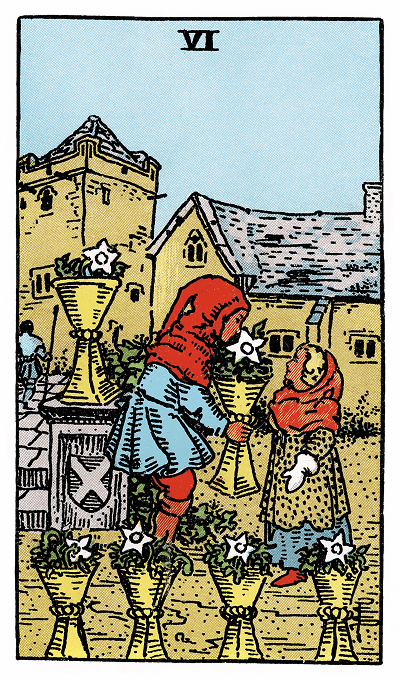
The Six of Cups — Rider-Waite-Smith version
Rider-Waite-Smith
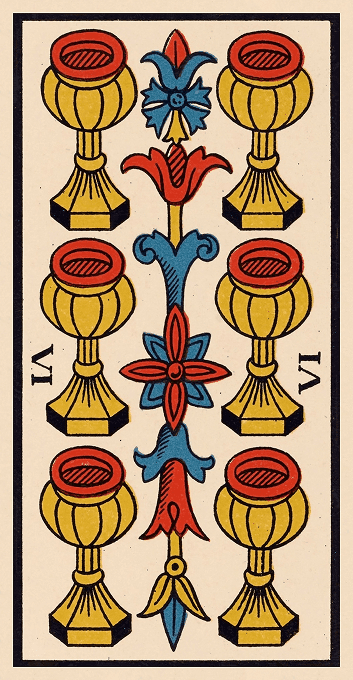
The Six of Cups — Marseille version
Marseille
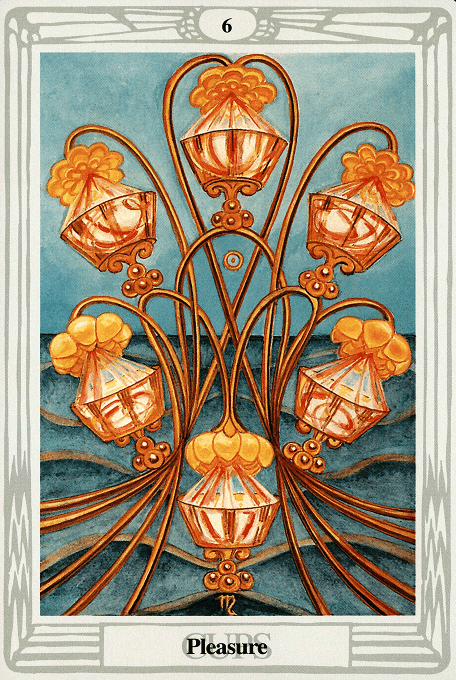
The Six of Cups — Thoth version
Thoth

In the Rider-Waite-Smith deck, a young child hands a cup filled with white flowers to a smaller child in a quiet, old-fashioned courtyard, with four more flower-filled cups arranged around them. A figure walks away in the background, and the buildings surrounding the scene suggest an established, settled town rather than anything new or unfamiliar. The core message concentrates in three details: the flowers filling each cup, associated with purity and simple pleasure rather than anything complicated, the act of giving between the two children, suggesting generosity rooted in innocence, and the departing figure in the background, hinting at the passage of time even within a scene otherwise focused on a fixed, comforting moment. Together these describe warmth connected to the past, particularly childhood, offered freely rather than earned through effort.

Waite's 1911 notes describe this card simply in terms of "memories" and things belonging to the past, alongside a general sense of felicity, without adding much further elaboration, a brevity modern readers sometimes fill in with more romanticized detail than Waite's own text actually supports. Earlier decks, including the Tarot de Marseille, depict the sixes of each suit without any illustrated scene, showing simply six cups arranged decoratively, meaning the specific imagery of children exchanging flowers is Waite and Smith's addition rather than an inherited symbol. This card's strong association with childhood nostalgia specifically, rather than just general fond memory, largely developed from Smith's choice to depict children in the scene rather than adults.

Upright Meaning

The Six of Cups represents warmth connected to the past, particularly memories from childhood or an earlier, simpler period. Its essential energy is nostalgia: a comforting return to something familiar, often marked by generosity and innocence rather than complicated adult concerns.

In everyday situations, this often shows up as reconnecting with an old friend or a piece of your past, revisiting a childhood home or hobby, or simply feeling a wave of fondness for an earlier chapter of your life. It can also describe generosity given freely, without expectation of anything in return, echoing the simple exchange between the two children in the image.

A nuance beginners often miss is that this card's nostalgia isn't necessarily about literal childhood or a specific past event. Many readers extend its meaning to any return to a simpler, more comfortable state, including reconnecting with an old version of yourself or a familiar way of approaching a situation, not strictly memories from youth. Reading this card only as "childhood memories" narrows a meaning that's really about comfort and familiarity more broadly.

Readers disagree somewhat on how much this card should be read as purely positive versus carrying a subtler caution about over-idealizing the past. Some traditions read the Six of Cups as straightforwardly comforting, emphasizing genuine warmth and innocent connection without much complication. Other, more psychologically minded readings note that nostalgia can sometimes idealize the past in ways that aren't entirely accurate, gently cautioning against romanticizing an earlier time more than it deserves. Both readings share the core theme of warmth tied to the past; they differ mainly in how uncritically that warmth should be embraced.

Reversed Meaning

Reversed, the Six of Cups doesn't simply mean nostalgia disappears or becomes automatically negative. That would just negate the upright meaning too flatly. The more useful distinction is between being genuinely stuck in the past and simply experiencing an unexpected return to it. Being stuck suggests clinging to an earlier time or way of thinking in a way that prevents present growth, romanticizing what's gone in a way that makes current reality feel disappointing by comparison.

A different shadow expression involves an unexpected reunion or return: someone or something from the past resurfacing, whether welcome or complicated, requiring you to navigate an old connection in a present context rather than simply remembering it fondly. This differs from being stuck, since here the past is actively reentering the present rather than simply being dwelled on internally.

The reversed card can also point to consciously moving forward from a comforting but limiting attachment to the past, recognizing that continuing to grow means not staying in a familiar, safe period indefinitely. This differs from an unexpected reunion; here the movement is intentional rather than something arriving unbidden.

It's worth noting that some readers don't use reversals at all, reading every card only upright and relying on surrounding cards for shading instead. If that's your approach, the stuck-in-the-past, unexpected-reunion, and moving-forward readings above still apply, held as tensions that can appear within an upright Six of Cups, particularly in a reading involving an old connection or memory that's resurfaced recently.

In a daily reading

Six of Cups in a Daily Reading

As a single morning card, the Six of Cups is worth reading as an invitation to enjoy a moment of nostalgia today, whether that's reaching out to an old friend or simply appreciating a familiar comfort. It's also worth noticing whether that nostalgia is grounding you or quietly holding you back from something new.

Say you pull this card before a day that includes an unexpected message from someone you haven't spoken to in years. The Six of Cups doesn't tell you how to respond; it suggests approaching the reconnection with warmth and openness, while staying aware of whether the connection still fits who you are now.

A daily-pull scenario

A Daily-Pull Scenario

Imagine pulling the Six of Cups on a morning before visiting your childhood neighborhood or attending a reunion of some kind. A beginner's first instinct might be to read this as a simple, uncomplicated promise of pleasant nostalgia throughout the day. A more useful reading treats the card as an invitation to enjoy the warmth of the memories while also noticing if you're comparing your current life unfavorably to an idealized version of the past, since genuine comfort and overly rosy nostalgia can look very similar in the moment but lead to different feelings afterward.

Read with care

Common Misreadings

  • This card only applies to actual childhood memories.

    The Six of Cups is often connected to childhood specifically, but many readers apply it more broadly to any comforting return to a simpler, more familiar state, not exclusively memories from youth.

  • This card always means something entirely positive.

    The card generally carries a warm tone, but some readings note a subtler caution against idealizing the past more than it deserves, especially when nostalgia starts to overshadow present reality.

  • Reversed always means someone unwelcome from my past is returning.

    Reversed can describe an unexpected reunion, but it can just as easily describe being stuck in old patterns internally, or a conscious, healthy decision to move forward from the past.

Combinations

Cards That Change Its Meaning

  • Six of CupsTen of Cups

    Amplifies the sense of family warmth and belonging, suggesting the nostalgia described here connects to a deeper, ongoing sense of home and lasting connection rather than a single isolated memory.

  • Six of CupsEight of Cups

    Tempers comfortable nostalgia with a pull toward leaving something familiar behind, suggesting a tension between the warmth of the past and a genuine need to move on from it.

  • Six of CupsThe Tower

    Redirects gentle nostalgia toward sudden disruption, suggesting a comforting connection to the past is about to be unsettled by an unexpected event or realization.

Sit with it

Questions for Reflection

  1. 1

    What memory or period from my past still brings genuine comfort when I think about it?

  2. 2

    Am I idealizing an earlier time in a way that makes my present feel less satisfying than it actually is?

  3. 3

    Is there an old connection or interest worth revisiting, or one I've been holding onto past its usefulness?

  4. 4

    What would it look like to carry the warmth of the past forward without staying stuck in it?