CupsWater
Tarot Card Meaning

Page of Cups

The Page of Cups means curiosity, emotional openness, and creative inspiration. Explore its upright and reversed meanings, symbolism, and daily-pull guidance.

Page of Cups tarot card
At a glance

Quick Keywords

Upright
  • curiosity
  • emotional openness
  • creative inspiration
  • a message or invitation
  • playfulness
  • sensitivity
  • new feelings
Reversed
  • emotional immaturity
  • escapism
  • creative block
  • insecurity
  • a disappointing message
  • oversensitivity
Symbolism

What's in the Image

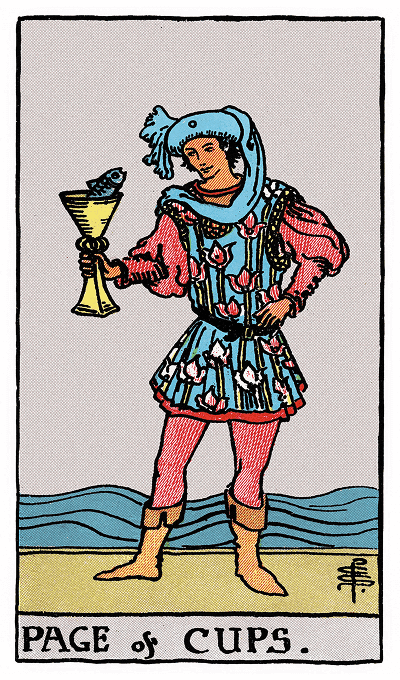
The Page of Cups — Rider-Waite-Smith version
Rider-Waite-Smith
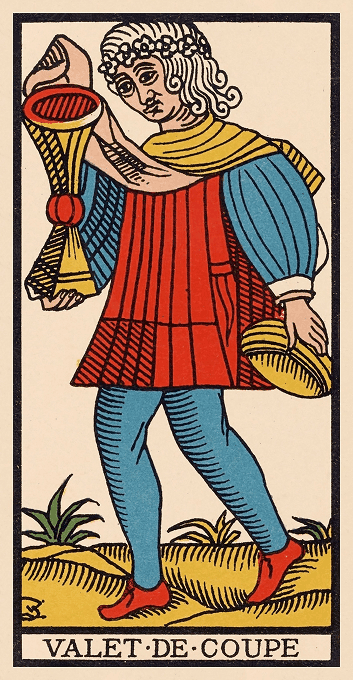
The Page of Cups — Marseille version
Marseille
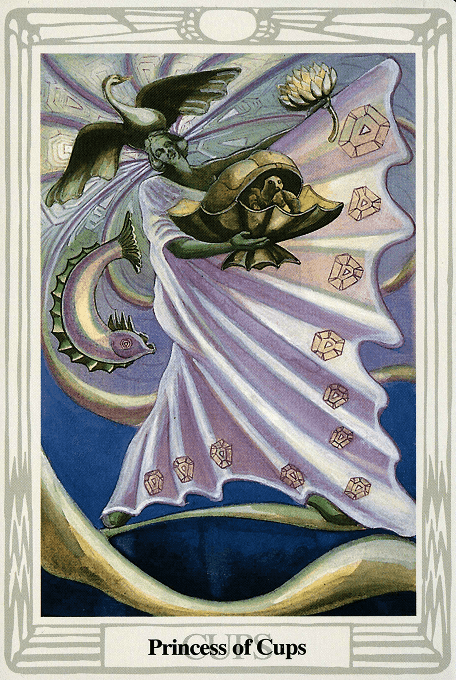
The Page of Cups — Thoth version
Thoth

In the Rider-Waite-Smith deck, a young figure stands at the edge of the sea, holding a cup from which a fish emerges, looking at it with an expression of surprised delight rather than alarm. Waves roll gently in the background, and the figure's patterned tunic suggests youth and individuality rather than formal rank. The core message concentrates in three details: the fish popping up unexpectedly from the cup, suggesting an idea or feeling arriving from the subconscious rather than being deliberately summoned, the figure's calm, curious reaction rather than fear or confusion, and the sea itself, tying this card to the emotional, intuitive quality shared by the whole cups suit. Together these describe an open, receptive relationship to feelings and ideas that surface unexpectedly.

Waite's 1911 notes describe this figure as studious in expression, absorbed in contemplation, with the fish representing "images of the subconscious mind," a detail modern readers sometimes miss in favor of the more visually charming surprise on the page's face. Court cards work differently across tarot traditions: the Tarot de Marseille uses a Valet (page or knave) in each suit as well, but without any illustrated scene beyond a plainly dressed figure holding the suit's symbol, meaning the specific fish-in-the-cup imagery is entirely Waite and Smith's addition, chosen to visually represent the subconscious material this card is associated with.

Upright Meaning

The Page of Cups represents openness to feelings, ideas, or messages that arrive unexpectedly, often from an intuitive or subconscious source rather than deliberate effort. Its essential energy is curious receptivity: meeting a new emotional or creative impulse with delight rather than caution.

In everyday situations, this often shows up as a burst of creative inspiration that seems to come from nowhere, a new emotional connection or crush that catches you pleasantly off guard, or literally receiving a message, invitation, or piece of news related to feelings or relationships. As with all court cards, some readers interpret the Page of Cups as representing an actual person, often someone young or young at heart, who embodies this same emotionally open, curious energy, rather than describing a situation or event.

A nuance beginners often miss is that pages across the deck are often read as messengers or students, figures still learning and absorbing rather than fully developed in their suit's mastery. Reading this card only as "romantic message incoming" misses its broader meaning as an early, still-forming stage of emotional or creative openness, one that hasn't yet matured into the deeper emotional fluency shown by the cups suit's queen or king.

Readers disagree on how literally to treat court cards as specific people versus general energies or situations. Some traditions read the Page of Cups quite literally, as pointing to an actual young person, or someone with a youthful, sensitive disposition, entering the situation being read. Other approaches treat all court cards primarily as describing an energy or approach available to anyone, regardless of age, rather than predicting a specific individual's arrival. Both readings share the theme of emotional openness and curiosity; they differ mainly in whether the card points to a person or a quality.

Reversed Meaning

Reversed, the Page of Cups doesn't simply mean total emotional closure. That would just negate the upright meaning too flatly. The more useful distinction is between emotional immaturity and using escapism to avoid dealing with feelings altogether. Emotional immaturity suggests reacting to feelings without much reflection, letting sensitivity tip into moodiness or overreaction rather than curious openness.

A different shadow expression involves escapism: retreating into fantasy, daydreaming, or creative distraction specifically to avoid engaging with a real emotional situation, rather than the upright card's genuine, curious engagement with what surfaces. This can look like avoiding a difficult conversation by losing yourself in something more comfortable, a different problem from simply overreacting emotionally.

The reversed card can also point to a disappointing message or piece of news, particularly if this card is being read as representing communication, suggesting whatever arrives doesn't bring the pleasant surprise the upright card describes. This differs from immaturity or escapism; here the issue is the content of what's received rather than how it's being processed emotionally.

It's worth noting that some readers don't use reversals at all, reading every card only upright and relying on surrounding cards for shading instead. If that's your approach, the immaturity, escapism, and disappointing-message readings above still apply, held as tensions that can appear within an upright Page of Cups, particularly in a reading involving someone (yourself or another person) who seems emotionally unsettled or avoidant.

In a daily reading

Page of Cups in a Daily Reading

As a single morning card, the Page of Cups is worth reading as an invitation to stay open to an unexpected feeling or idea today, meeting it with curiosity rather than immediately analyzing or dismissing it. It's a good day to notice a small, surprising emotional moment and let yourself sit with it.

Say you pull this card before a day that includes an unplanned conversation or message from someone unexpected. The Page of Cups doesn't tell you what the message will say; it suggests approaching whatever arrives with openness and genuine curiosity, rather than bracing for a specific outcome.

A daily-pull scenario

A Daily-Pull Scenario

Imagine pulling the Page of Cups on a morning before starting a new creative hobby you're not very experienced with yet, like painting or writing for the first time in years. A beginner's first instinct might be to read this as a sign you'll immediately be skilled at it. A more useful reading treats the card as an encouragement to approach the new activity with a beginner's curiosity, staying open to whatever ideas or feelings surface without judging them too quickly, since the page's fish appearing unexpectedly from the cup suggests the value here lies in surprise and openness, not immediate mastery.

Read with care

Common Misreadings

  • This card always means a specific person is entering my life.

    Some traditions read court cards as literal people, but many contemporary readers treat the Page of Cups as describing an emotional quality or approach, curious openness, available to anyone rather than predicting a specific individual.

  • This card guarantees good romantic news.

    The Page of Cups describes emotional openness and unexpected feeling, not a guaranteed positive message. Reading it as a promise of good romantic news overlooks its broader meaning about receptivity itself.

  • Reversed always means I'm emotionally shut down.

    Reversed can describe immaturity or escapism, but it can just as easily point to a specific disappointing message or a moodiness that isn't the same as full emotional closure.

Combinations

Cards That Change Its Meaning

  • Page of CupsThe Fool

    Amplifies the sense of fresh, unguarded openness, suggesting an emotional or creative beginning approached with genuine innocence and willingness to explore without a fixed plan.

  • Page of CupsQueen of Cups

    Tempers youthful emotional openness with more developed intuitive maturity, suggesting the curious feeling described here is being met with wiser, steadier emotional support.

  • Page of CupsFive of Cups

    Redirects playful curiosity toward disappointment, suggesting the message or feeling that arrives may bring some genuine letdown rather than pleasant surprise.

Sit with it

Questions for Reflection

  1. 1

    What unexpected feeling or idea have I encountered recently that deserves more curious attention?

  2. 2

    Am I approaching something new with openness, or am I already judging it before giving it a chance?

  3. 3

    Is there a message or piece of communication I've been avoiding or anticipating?

  4. 4

    What would it look like to meet an emotional surprise today with delight rather than caution?