Major ArcanaCard 20Fire · Pluto
Tarot Card Meaning

Judgment

The Judgment tarot card means reckoning, awakening, and renewal. Explore its upright and reversed meanings, symbolism, and daily-pull guidance.

Judgment tarot card
At a glance

Quick Keywords

Upright
  • reckoning
  • awakening
  • self-evaluation
  • renewal
  • calling
  • forgiveness
  • transformation
  • clarity
Reversed
  • self-doubt
  • harsh self-judgment
  • avoiding a reckoning
  • delayed awakening
  • difficulty forgiving
  • ignoring a calling
Symbolism

What's in the Image

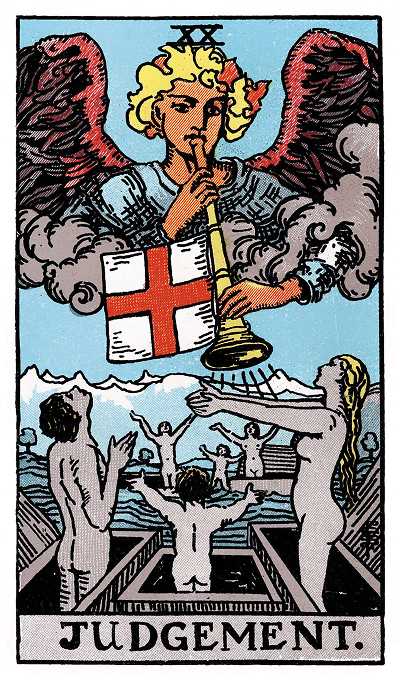
The Judgment — Rider-Waite-Smith version
Rider-Waite-Smith
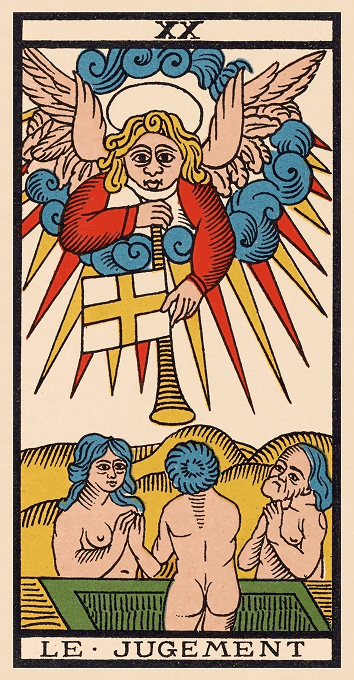
The Judgment — Marseille version
Marseille
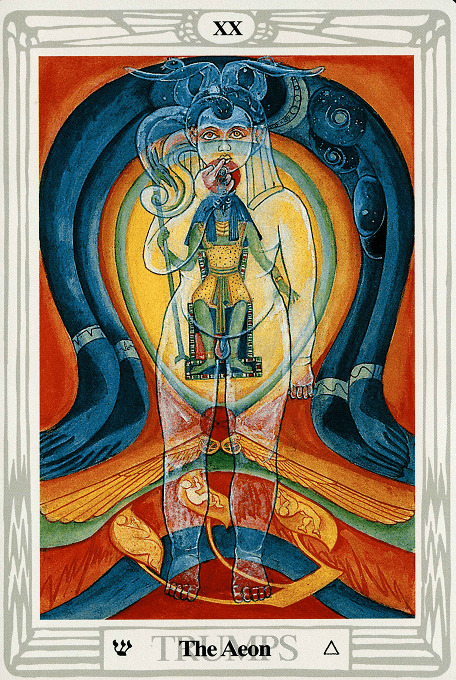
The Judgment — Thoth version
Thoth

In the Rider-Waite-Smith deck, an angel blows a trumpet from the clouds above, and figures below rise from open coffins with their arms raised, appearing to answer the call. Mountains stand in the far distance, and a cross marks the trumpet's banner. The core message concentrates in three details: the raised arms of the rising figures, suggesting willing response rather than reluctant compulsion, the coffins that have already opened, indicating the moment of decision has arrived rather than being anticipated, and the trumpet call itself, an external prompt that awakens something already present in each figure rather than creating it from nothing. Together these describe a moment of being called to account and choosing to answer clearly and directly.

Waite's 1911 notes tie this card explicitly to Christian resurrection imagery, describing it as representing "the awakening from the sleep of ages" and change of state, language that ties the card firmly to renewal rather than punishment despite its dramatic, reckoning-heavy visuals. This card is sometimes called The Last Judgment in older texts, and the Tarot de Marseille's version shows broadly similar imagery, an angel with a trumpet and rising figures below, suggesting the core symbolism predates Waite and Smith and draws directly on centuries of religious art depicting resurrection and final reckoning, a tradition well established in European painting long before tarot adopted it.

Upright Meaning

Judgment represents a moment of honest self-evaluation that leads to genuine renewal. Its essential energy is awakening: recognizing something clearly, often about your own past choices or patterns, in a way that allows you to move forward with new clarity rather than staying stuck in old assumptions about yourself.

In everyday situations, this often shows up as a moment of reckoning with a past decision or pattern, honestly assessing what worked and what didn't, without excessive harshness or excuse-making. It can also describe answering a call toward something meaningful, a sense of purpose or direction that feels significant enough to respond to directly, similar to the rising figures answering the trumpet.

A nuance beginners often miss is that this card's reckoning isn't primarily about punishment. The raised arms of the figures suggest willingness rather than dread, and Waite's own language emphasizes awakening and renewal over judgment in the harsher, more punitive sense the word might suggest. Reading this card only as "you're being judged" skips over its more accurate meaning: an invitation to evaluate yourself honestly, which can lead somewhere genuinely freeing rather than simply somewhere uncomfortable.

Readers disagree somewhat on how much this card should be read through its explicitly religious imagery versus a more secular framework of self-reflection and accountability. Some traditions keep the resurrection and Christian symbolism front and center, tying the card closely to spiritual awakening in a specific religious sense. Other, more secular approaches translate the same imagery into psychological terms, treating the "call" as any strong internal prompt toward change or self-honesty, regardless of religious framework. Both readings share the theme of being summoned toward clarity; they differ mainly in how literally to take the religious imagery involved.

Reversed Meaning

Reversed, Judgment doesn't simply mean the reckoning is avoided entirely. That would just negate the upright meaning without describing what actually happens instead. The more useful distinction is between harsh self-judgment and an active avoidance of self-evaluation altogether. Harsh self-judgment suggests turning the upright card's honest assessment into something excessively critical, dwelling on past mistakes without allowing the same card's promise of renewal to follow.

A different shadow expression involves avoidance: ignoring a call toward change or self-honesty, ducking away from an evaluation that genuinely needs to happen, perhaps because facing it feels too uncomfortable right now. This can look like staying busy specifically to avoid quiet reflection, or dismissing a pattern that keeps resurfacing rather than examining it directly. This is nearly the opposite of harsh self-judgment, yet both fall under a reversed Judgment depending on the specifics of the reading.

The reversed card can also point to difficulty forgiving, either yourself or someone else, getting stuck in the reckoning itself without moving through it toward the renewal the upright card describes. This differs from simple avoidance; here the person has engaged with the evaluation but hasn't yet found a way to release what it revealed.

It's worth noting that some readers don't use reversals at all, reading every card only upright and relying on surrounding cards for shading instead. If that's your approach, the harsh-judgment, avoidance, and difficulty-forgiving readings above still apply, held as tensions that can appear within an upright Judgment, particularly in a reading involving unresolved guilt or a pattern that keeps resurfacing.

In a daily reading

Judgment in a Daily Reading

As a single morning card, Judgment is worth reading as a nudge to look honestly at a pattern or decision today rather than avoiding the evaluation altogether. It's a good day to notice a call toward something meaningful and consider answering it directly rather than putting it off.

Say you pull this card before a day that includes deciding whether to address a recurring issue you've been avoiding, like a habit that's stopped serving you. Judgment doesn't tell you the outcome of facing it; it suggests approaching the evaluation honestly, without excessive self-criticism, and staying open to whatever renewal might follow once you've looked at it clearly.

A daily-pull scenario

A Daily-Pull Scenario

Imagine pulling Judgment on a morning before deciding whether to reach out and repair a relationship that ended on unclear terms. A beginner's first instinct might be to read this as a sign you're being punished for something or that the other person is judging you harshly. A more useful reading treats the card as an invitation to honestly evaluate your own part in what happened, without excessive self-blame, and to consider whether reaching out represents a genuine call worth answering or simply an old pattern resurfacing. The card supports clear-eyed reflection, not a verdict handed down from outside.

Read with care

Common Misreadings

  • This card means I'm being punished.

    Judgment describes honest self-evaluation and renewal, not punishment in the harsh sense the name might suggest. Waite's own notes tie the card to awakening rather than condemnation.

  • This card predicts a literal religious or final reckoning.

    While the imagery draws on resurrection symbolism, most modern readings translate this into personal self-evaluation and renewal rather than anything about an afterlife or literal spiritual verdict.

  • Reversed always means I'm avoiding responsibility.

    Reversed can describe avoidance, but it can just as easily describe excessive self-criticism or difficulty forgiving after already facing the reckoning honestly, different problems than simple avoidance.

Combinations

Cards That Change Its Meaning

  • JudgmentThe Sun

    Amplifies the sense of renewal following honest self-evaluation, suggesting the reckoning leads toward genuine relief and confidence rather than lingering discomfort.

  • JudgmentEight of Swords

    Tempers clear awakening with a feeling of being trapped, suggesting the person may recognize what needs to change but feel unable to act on that clarity yet.

  • JudgmentThe Devil

    Redirects general self-evaluation toward a specific, unhealthy pattern, suggesting the reckoning being called for involves confronting a habit or dependency directly rather than a broader life reflection.

Sit with it

Questions for Reflection

  1. 1

    What pattern or past decision have I been avoiding an honest look at?

  2. 2

    Is there a call toward something meaningful that I've been putting off answering?

  3. 3

    Where am I being harsher on myself than the situation actually calls for?

  4. 4

    What would genuine renewal look like for me once I've faced something honestly?