SwordsAir
Tarot Card Meaning

Four of Swords

The Four of Swords means rest, recovery, and quiet reflection. Explore its upright and reversed meanings, symbolism, and daily-pull guidance.

Four of Swords tarot card
At a glance

Quick Keywords

Upright
  • rest
  • recovery
  • withdrawal
  • quiet reflection
  • recuperation
  • stillness
  • pausing before returning to action
Reversed
  • restlessness
  • burnout from lack of rest
  • forced return to activity
  • resistance to slowing down
  • recovery interrupted
Symbolism

What's in the Image

The Four of Swords — Rider-Waite-Smith version
Rider-Waite-Smith
The Four of Swords — Marseille version
Marseille
The Four of Swords — Thoth version
Thoth

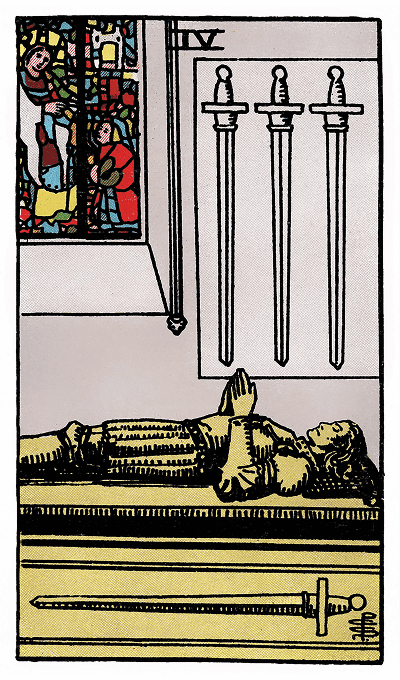
In the Rider-Waite-Smith deck, a knight lies still on a tomb inside a chapel, hands folded as if in prayer or repose, with three swords hanging on the wall above him and a fourth lying alongside his body. A stained-glass window depicting a figure blessing a smaller kneeling figure appears above him. The core message concentrates in three details: his still, horizontal posture, suggesting deliberate rest rather than active engagement, the three swords mounted on the wall, set aside rather than in use, indicating conflict or activity that's been paused, and the single sword lying beside him, close at hand but not gripped, suggesting readiness held quietly in reserve rather than immediate need. Together these describe intentional withdrawal for the purpose of recovery, a pause taken so that renewed strength or clarity can follow.

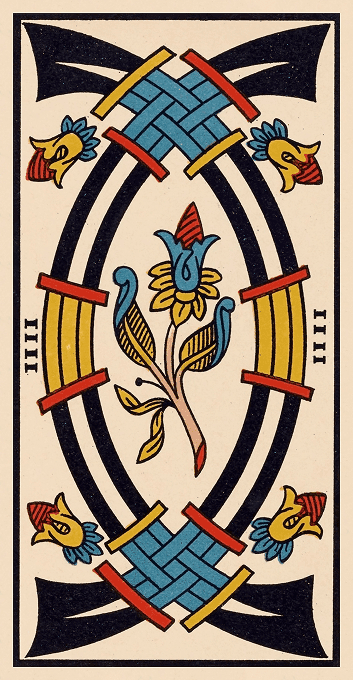
Waite's 1911 notes describe this card as relating to "retreat" and quiet, specifically distinguishing it from exile or defeat, framing the withdrawal as chosen and restorative rather than forced or shameful, a distinction modern readers sometimes miss when they associate a tomb-like setting too quickly with something more final or somber. Earlier decks, including the Tarot de Marseille, depict the fours of each suit without any illustrated scene, typically showing simply four swords arranged decoratively, meaning the specific image of a resting knight in a chapel is Waite and Smith's addition, chosen to represent this pause as peaceful and intentional rather than merely a plain suit symbol would suggest.

Upright Meaning

The Four of Swords represents deliberate rest taken specifically to recover and prepare for what comes next. Its essential energy is restorative withdrawal: stepping back from activity or conflict, not out of avoidance, but because genuine recovery requires quiet and stillness before returning to engagement.

In everyday situations, this often shows up as taking a break after a demanding stretch of work, recovering from illness or exhaustion, or simply needing quiet time alone after a period of stress or conflict. It can also describe a mental or emotional pause, stepping back from an ongoing disagreement or decision specifically to give yourself space to think clearly before engaging further.

A nuance beginners often miss is that this card's rest is active in purpose even though it looks passive on the surface. The sword lying beside the knight, close but not gripped, suggests he remains prepared to return to action when the time comes, rather than having permanently abandoned engagement altogether. Reading this card only as "stop everything indefinitely" misses its more precise meaning: a temporary, purposeful pause meant to restore capacity, not a permanent retreat from responsibility.

Readers disagree somewhat on how urgently this card should be read as calling for immediate rest versus simply describing a state already underway. Some traditions read the Four of Swords as fairly direct advice, encouraging the person receiving the reading to actively slow down and prioritize recovery right now. Other, more descriptive readings treat the card as simply naming a state of rest or recovery that's already happening or clearly needed, without necessarily prescribing immediate action. Both readings share the underlying theme of restorative pause; they differ mainly in whether the card is read as instruction or observation.

Reversed Meaning

Reversed, the Four of Swords doesn't simply mean rest is no longer needed. That would just negate the upright meaning without describing what's actually happening instead. The more useful distinction is between restlessness that resists needed rest and a recovery period that's being interrupted by outside demands. Restlessness suggests an inability to slow down even when your body or mind clearly needs it, pushing through exhaustion rather than allowing the pause the upright card describes.

A different shadow expression involves a forced return to activity: circumstances requiring you to reengage before you've actually finished recovering, similar to being called back to duty before you're truly ready. This differs from restlessness, since here the interruption comes from external demands rather than an internal inability to stop.

The reversed card can also point to burnout resulting from a lack of adequate rest over time, the consequences of ignoring this card's upright message building up until they can no longer be avoided. This differs from both restlessness and forced return; here the issue is the cumulative cost of insufficient recovery rather than a single instance of interruption or resistance.

It's worth noting that some readers don't use reversals at all, reading every card only upright and relying on surrounding cards for shading instead. If that's your approach, the restlessness, forced-return, and burnout readings above still apply, held as tensions that can appear within an upright Four of Swords, particularly in a reading involving someone who's been pushing through exhaustion without adequate recovery.

In a daily reading

Four of Swords in a Daily Reading

As a single morning card, the Four of Swords is worth reading as encouragement to genuinely rest today, rather than filling every hour with activity or obligation. It's a good day to step back from a demanding situation, even briefly, and allow yourself real recovery time.

Say you pull this card before a day that includes recovering from a stressful stretch, like a demanding work project or an emotionally difficult week. The Four of Swords doesn't suggest permanently withdrawing from your responsibilities; it suggests taking deliberate, restorative rest now so you can return to those responsibilities with renewed clarity and energy.

A daily-pull scenario

A Daily-Pull Scenario

Imagine pulling the Four of Swords on a morning after a particularly demanding week, when you're deciding whether to keep pushing forward with plans or take a quiet day to yourself instead. A beginner's first instinct might be to read this as a sign you're being lazy or falling behind by choosing to rest. A more useful reading treats the card as validation that deliberate rest is productive in its own right, since the knight in the image keeps his sword close at hand even while resting, suggesting recovery and readiness aren't opposites, quiet now supports better engagement later.

Read with care

Common Misreadings

  • This card means giving up or permanently withdrawing.

    The sword resting beside the knight, still within reach, suggests temporary, purposeful rest rather than permanent retreat. This card describes a pause meant to restore capacity, not abandonment of responsibility.

  • This card means something is deeply wrong, given the tomb-like setting.

    Waite's own notes specifically distinguish this retreat from exile or defeat, describing it instead as peaceful and restorative. The chapel setting represents quiet sanctuary, not anything more ominous.

  • Reversed always means I'm lazy or avoiding responsibility.

    Reversed can describe restlessness that resists needed rest, but it can just as easily describe a forced return to activity before recovery is complete, or burnout from a lack of rest, both very different from laziness.

Combinations

Cards That Change Its Meaning

  • Four of SwordsThe Star

    Amplifies gentle healing, suggesting the rest described here is genuinely restorative and connected to a broader sense of hope and recovery.

  • Four of SwordsTen of Swords

    Tempers restful withdrawal with a sense that this pause follows something genuinely exhausting or difficult, making the need for recovery even more significant.

  • Four of SwordsThe Chariot

    Redirects quiet rest toward renewed forward motion, suggesting the period of recovery is ending and it's time to reengage with focused energy.

Sit with it

Questions for Reflection

  1. 1

    Where in my life could I use more deliberate, restorative rest rather than pushing through exhaustion?

  2. 2

    Am I resisting a needed pause out of habit or fear of falling behind?

  3. 3

    What would genuine recovery look like for me right now, distinct from simply being unproductive?

  4. 4

    Is there a demanding situation I could step back from briefly in order to return to it with more clarity?